
Which Seat Is Best for Turbulence? A Pilot Explains
Nov 10, 2026
Hi, I’m Flyman Simon, airline captain and fear of flying coach.
You’ve just booked your flight, and now you’re staring at the seat map wondering which seat will feel the smoothest when the turbulence hits.
Here’s the truth: every seat gets turbulence, and the difference between them is much smaller than you might think.
Does It Really Matter Where You Sit?
You’ll often read in the media and on travel blogs that your seat makes a big difference to how bumpy your flight feels. The honest answer from the flight deck is that it makes very little difference. There is a slight difference between the front, the middle and the back of the aircraft, but it’s small. It’s not something to worry about when you’re choosing your seat.
And here’s the part most people don’t realise. If you board thinking, “I’m at the back, this is going to be bumpy,” your brain has already decided what to expect. It goes looking for every bump, and you’ll be more sensitive to each one. Go on board knowing the difference is small, and you’ll notice far less.
With that in mind, here’s how each part of the cabin compares, so you can choose what suits you best.
What Is the Best Seat on a Plane for Turbulence?
Over the wing is where you’ll feel it least, but only just. You’re sitting close to the aircraft’s centre of gravity, so most of what you feel is the up and down movement, with a little less rocking and swaying than at the front or back. You’ll still feel some, and the difference is small. If you had to choose, over the wing is slightly better, but that’s all. Understanding what turbulence is will help you far more than any seat on the plane.
And wherever you end up sitting, the one thing that makes the biggest difference is your seatbelt. Keep it loosely fastened whenever you’re in your seat, then pull it snug when the bumps start.
Is the Front of the Plane Good in Turbulence?
The front of the cabin feels similar turbulence to over the wing, but with one big advantage: it’s quieter. You’re ahead of the engines, so the noise travels behind you. Less noise means less stress, even in the bumps.
It’s no surprise the most expensive seats are usually at the front: quieter and slightly smoother.
Is the Back of the Plane Worse for Turbulence?
The rear of the cabin gets the same up and down motion as the front, but with one big difference: engine noise. When turbulence hits, the engines constantly adjust thrust to keep the speed stable, and at the back you hear every change. That noise makes the turbulence feel more dramatic than it actually is.
Both the front and the rear also get a slight rocking motion, as the aircraft pivots a little around its centre while it corrects small changes in height. It’s tiny, but you’ll notice it more than someone sitting over the wing.
Window or Aisle?
If you can, take a window seat. Being able to see the horizon gives your balance system something steady to lock on to, so the bumps feel smaller than they do when all you can see is the seat in front of you.
What Matters More Than Your Seat
Your seat choice might shave off a bit of motion, but it’s what you do when the turbulence starts that decides whether you stay calm or panic.
The simplest thing is what we do on the flight deck: keep your seatbelt loosely fastened whenever you’re in your seat, for the whole flight. Then when the bumps come, you’re already secure and there’s nothing to rush for.
Quick Answers
Does it matter where I sit for turbulence?
Very little. There’s a slight difference between seats, but it’s small, and nothing to worry about.
Which seat feels turbulence the least?
Over the wing, close to the aircraft’s centre of gravity, but only slightly.
Is the back of the plane bumpier?
It feels a little more, mostly because you can hear the engines adjusting. It isn’t any less safe.
Does where I sit make turbulence dangerous?
No. In every seat, the thing that keeps you safe is your seatbelt.
Want to Feel Calmer in the Bumps?
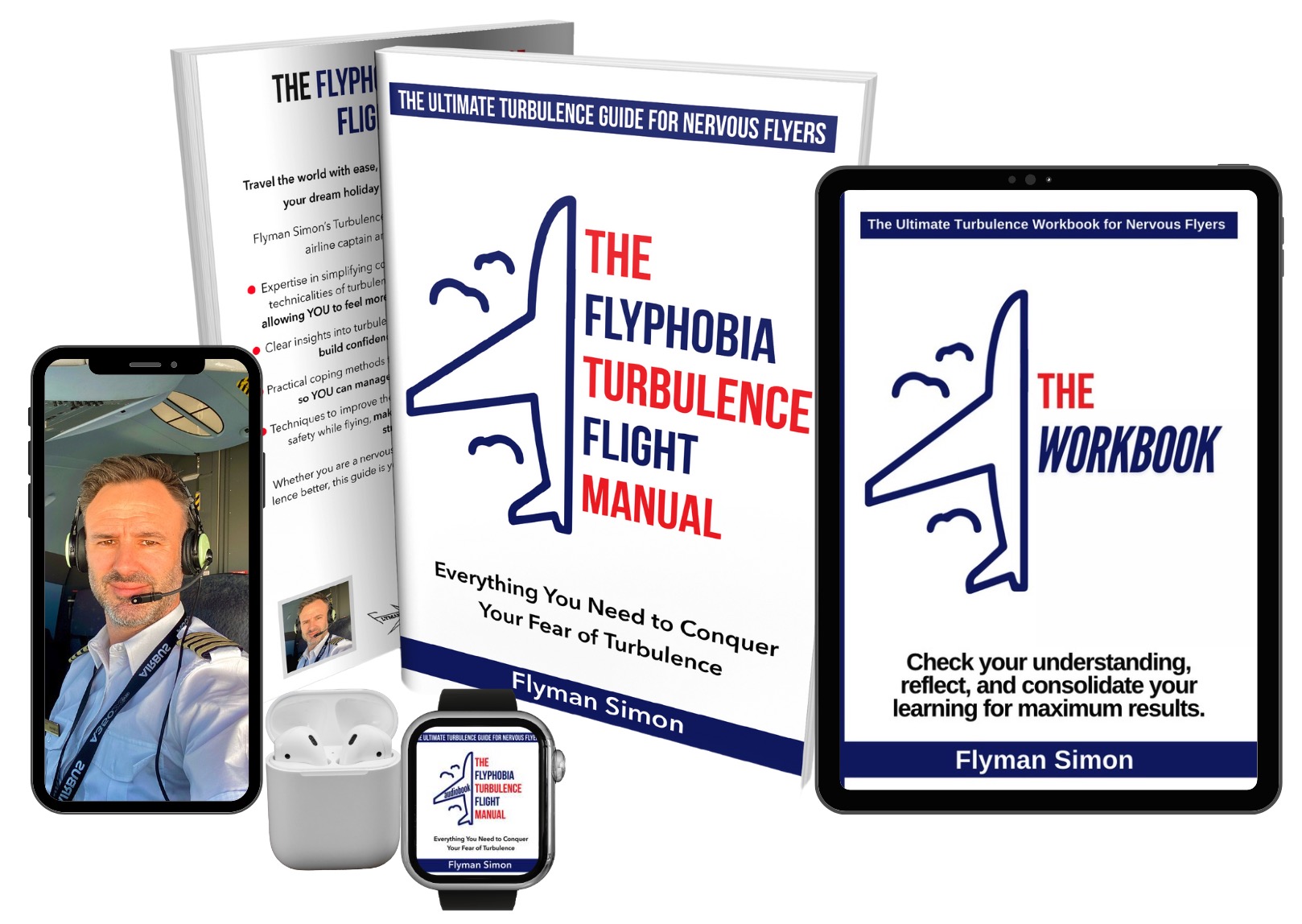
That’s why I created the Turbulence Trio: an audiobook that talks you through exactly what’s happening during turbulence and why it’s safe, an eBook with everything you need to know about turbulence, and a workbook to make sure it’s all sunk in before your flight. You can download it all before you fly, so it’s ready the second the seatbelt sign pings on.
It’s helped hundreds of nervous flyers stay calm in the bumps. Not because they picked the perfect seat, but because they knew what to do when it got rough.
> 🛫 Get the Turbulence Trio HERE 🛫 <
And if you want more reassuring reads, there are plenty of my Fear of Flying Blogs waiting for you. Just click the ‘Blog’ link at the top of the page and dive in.
Fly Happy, Fly Safe!
Simon
Captain Flyman Simon
Join Over 10,000 People Learning to Fly Calmer
Get started today 🛫👇
